streetlightwear
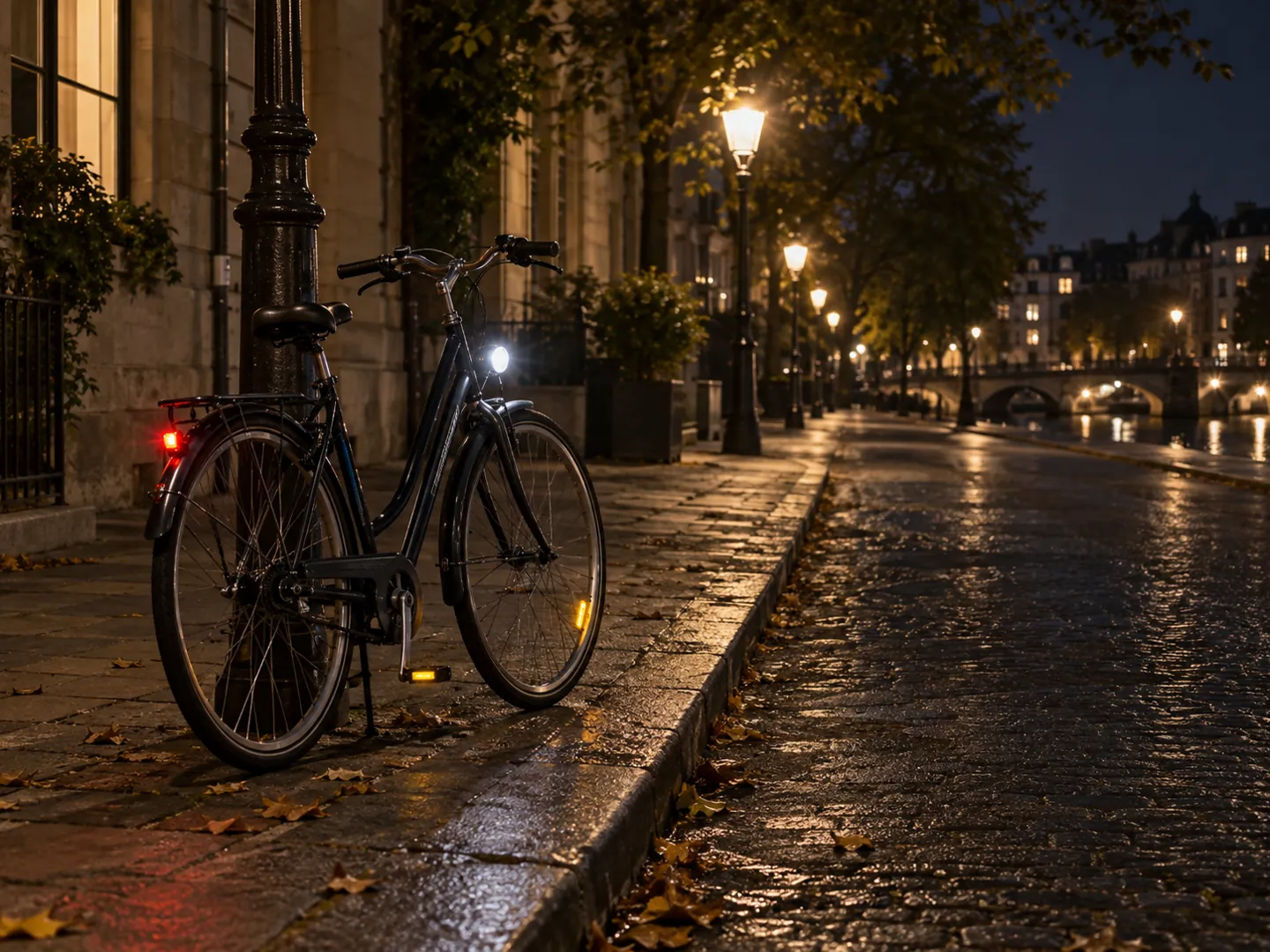
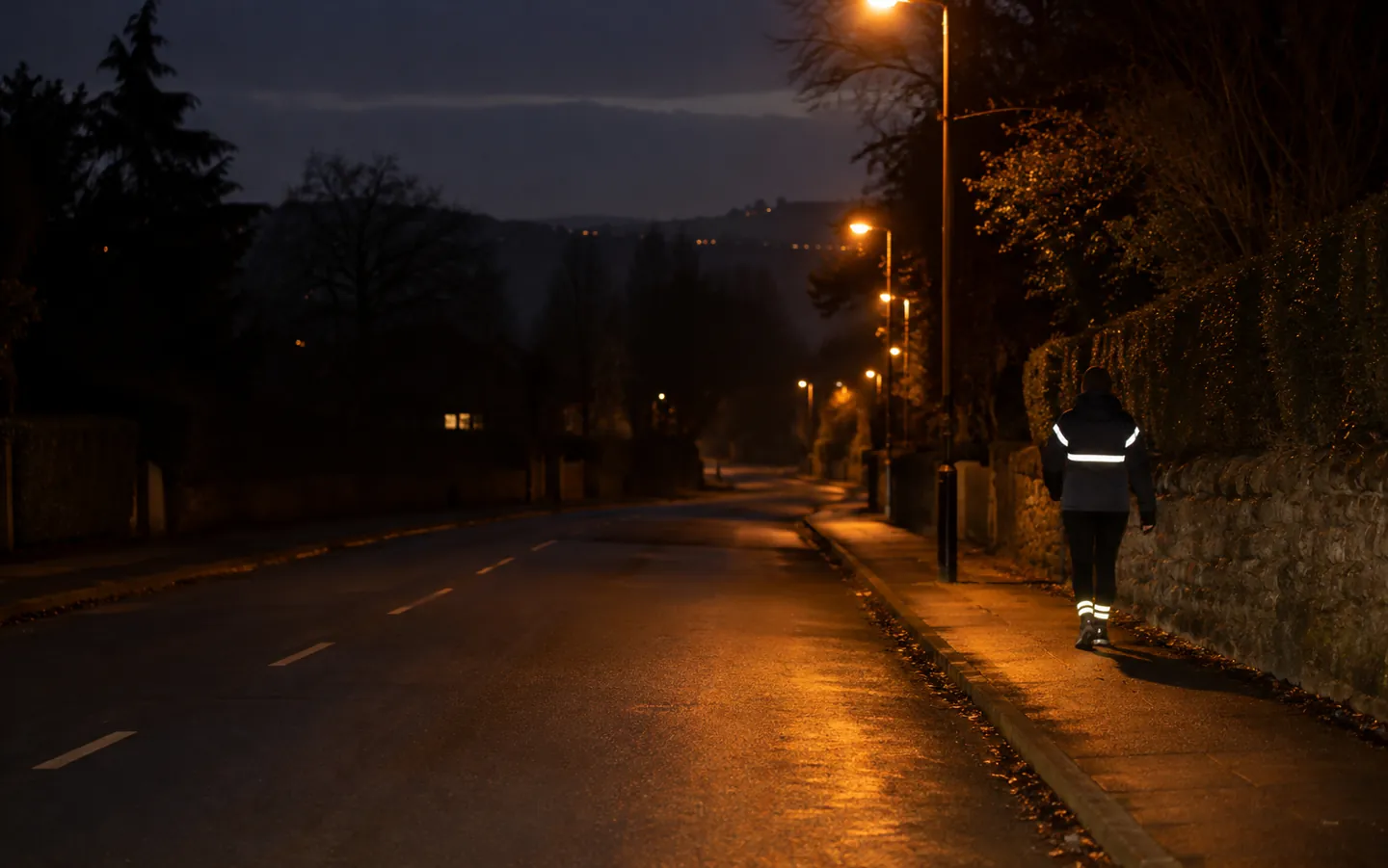
A walker seen from behind on a lamp-lit pavement at dusk, reflective strips on their jacket and ankles glowing in car headlights
AI-generated image, not a photograph of a real person or place.

WHAT THE EVIDENCE SAYS

Fluorescent by day,
reflective by night.

Drivers often do not see walkers in time.

At night, colour stops helping: a fluorescent top needs daylight to glow. What shows up in headlights is reflective material, and studies on closed roads find it works best on the parts of you that move.

3× FURTHER reflective vs non-reflective

Check an outfit

THE SHORT ANSWER

Colour by day,
reflection by night.

The Highway Code separates the two.
Night-time studies show why.

THE HIGHWAY CODE

Up to three times as far

The Highway Code says reflective materials can be seen by drivers using headlights up to three times as far away as non-reflective materials. Wear something bright or fluorescent in poor daylight.

Check an outfit
MOVING JOINTS

Strips on ankles and knees

Reflective markers on the moving joints, called biomotion, help drivers recognise a person sooner. One study found them up to 3 times better than a vest with the same reflective material.

See the numbers

CYCLISTS

Lights are the law

At night a bicycle must have white front and red rear lights lit, a red rear reflector and, if made after 1 October 1985, amber pedal reflectors.

Get set up
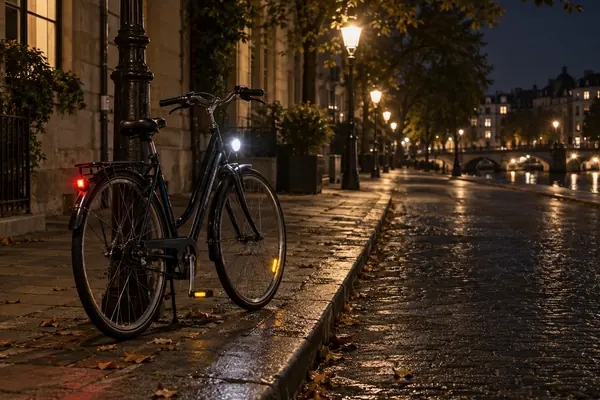
A bicycle parked on a street at night with its white front light on and amber pedal reflectors glowing
AI-generated image, not a photograph of a real person or place.

FOUR WAYS TO BE SEEN

Small changes,
seen sooner.

These come straight from the Highway Code and the night-time studies.

  1. Wear bright colours in daylight

    Light-coloured, bright or fluorescent clothing helps other road users see you in poor daylight.

  2. Add reflectives after dark

    Armbands, sashes, waistcoats, jackets or footwear with reflective material show up in headlights.

  3. Put them on what moves

    Ankle and knee bands make your walking or pedalling movement recognisable as a person.

  4. Cross near a street light

    If there is no crossing nearby, the Highway Code says cross near a street light so traffic can see you more easily.

TWO NUMBERS WORTH KNOWING

Where the strips go
matters most.

One figure on reflective strips on the joints,
one on how far they push recognition out.

≈ 4× further

Recognition distance vs black clothing

Pedestrians wearing reflective strips on their moving joints were recognised at about 135 m, compared with about 35 m in black clothing and 54 m in a fluorescent top.

BIOMOTION · 2023 STUDY

6× further

Visibility vs no reflective markings

Queensland University of Technology studies found reflective strips on the ankles and knees increased visibility distances six-fold compared with no reflective markings.

ANKLES AND KNEES · QUT RESEARCH

The same researchers found cyclists overestimated how visible they were at night and wrongly judged that a fluorescent vest without reflective material would help.

A QUICK OUTFIT CHECK

How soon will
a driver see you?

Pick an outfit to see how far away young drivers with normal vision recognised a pedestrian at night in a 2023 closed-road study. The bar shows how early you are likely to be seen.

Outfit check

Choose an outfit
Dark or black clothingAbout 35 m

Recognised at around 35 metres. The study notes a car at 60 km/h, about 40 mph, needs around 45 m to stop on a dry road.

A fluorescent yellow top, no reflectorsAbout 54 m

Better than black, but without reflective material a fluorescent top gave poor conspicuity at night.

Sports kit with small reflective detailsAbout 74 m

Commercial sports clothing with some reflective elements was recognised roughly twice as far away as black clothing.

Reflective strips on the moving jointsAbout 135 m

All biomotion designs were recognised about 4 times further away than black clothing, even with strips as thin as 0.75 cm.

Source: Making night-time pedestrians safer using innovative clothing designs, Transportation Research Part F (2023), accepted version via Leeds Beckett University.

Average recognition distances from a night-time closed-road study with 14 young drivers. Older drivers and those with poorer vision are likely to recognise pedestrians later.

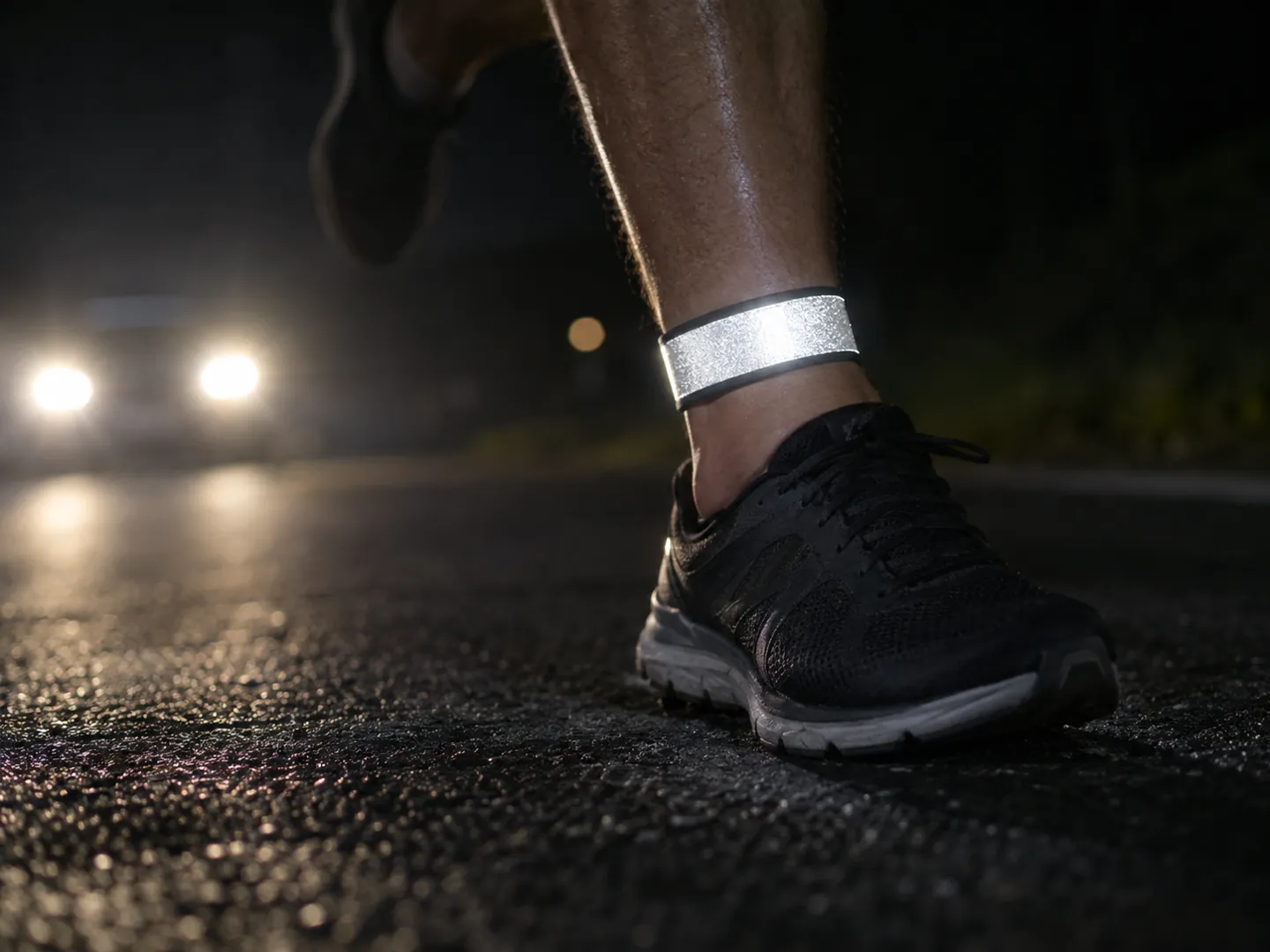
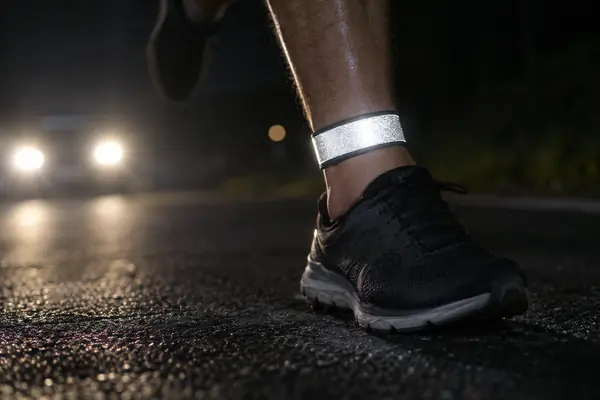
Close-up of a reflective band around a runner's ankle catching headlight glare on a dark road
AI-generated image, not a photograph of a real person or place.

WHY NIGHT IS RISKIER

Low contrast,
late recognition.

The 2023 study notes that drivers often fail to see pedestrians in time, and that poor conspicuity is a leading risk factor. Studies it cites found pedestrians in the US were 5 times more likely to be fatally injured at night than by day.

In Australian data it cites, the odds of a fatal pedestrian injury were 2.9 times higher on dark streets with lights, and 7.9 times higher on dark streets without them, compared with daytime.

Questions

Questions people ask

Does fluorescent clothing work at night?

Not on its own. The Highway Code recommends fluorescent or bright clothing for poor daylight, and reflective materials in the dark. A 2023 study found a fluorescent top without reflectors was seen at about 54 m, against about 135 m for reflective joint strips.

How much further away is reflective clothing seen?

The Highway Code says drivers using headlights can see reflective materials up to three times as far away as non-reflective materials.

Where should reflective strips go?

On the moving joints, such as ankles and knees. Research found this biomotion layout increased recognition distance by up to 3 times compared with a vest using the same amount of reflective material.

What lights does a bicycle need at night?

The Highway Code says a cycle must have white front and red rear lights lit, a red rear reflector, and amber pedal reflectors if made after 1 October 1985.

Is a hi-vis vest enough for cycling at night?

A vest helps, but QUT research found cyclists overestimated their visibility and underestimated the benefit of reflective markers on ankles and knees.

Sources

  1. GOV.UK: The Highway Code, rules for pedestrians (1 to 35)
  2. GOV.UK: The Highway Code, rules for cyclists (59 to 82)
  3. Leeds Beckett Repository: Making night-time pedestrians safer using innovative clothing designs, Transportation Research Part F (2023)
  4. Queensland University of Technology, Vision and Driving research: pedestrian and cyclist visibility

Updated

ABOUT THIS NAME

Interested in leasing streetlightwear.com?

streetlightwear.com is part of the DoodleSale portfolio. It isn't in an auction right now, but you can ask about leasing it.

Ask about this name